
Cyanotype Starter Kit
R299,00
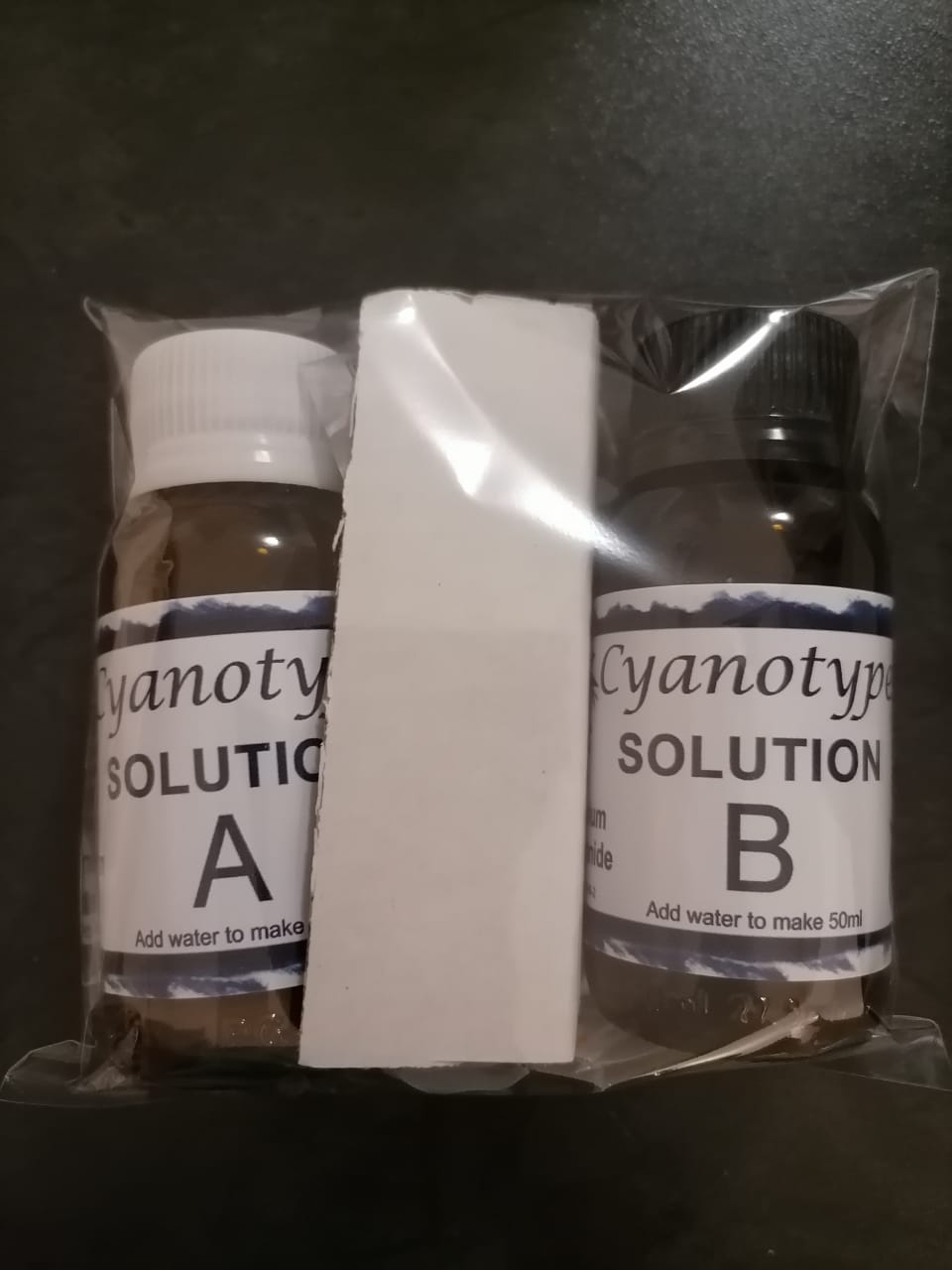
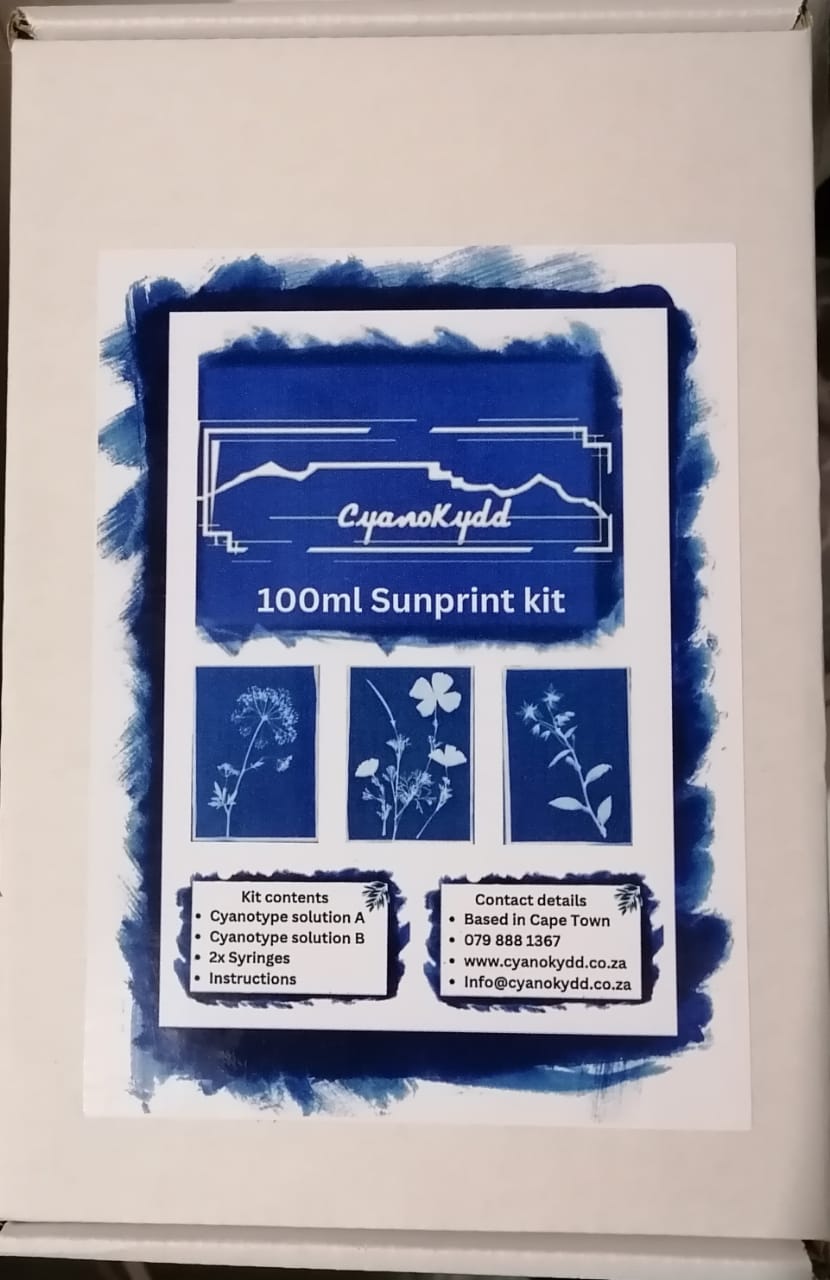
Sunprinting is FUN in the sun. Instructions are included and are very easy to follow.
Mix A + B and coat watercolour paper.
Free delivery.
Very short introduction to Cyanotype
Cyanotype, or “blue print,” was discovered in 1842 by English scientist John Frederick William Herschel (1792-1871). Due to the characteristic blue color of the resulting pictures, the procedure was relatively unpopular among the first photographers, but it was very useful for other purposes, such as copying a variety of technical and construction drawings.
The first and almost the only well-known user of cyanotype was Anna Atkins (1799 – 1871), who already in 1843 made the first photographic book with cyanotype photographs of plants. The book was called British Algae: Cyanotype Impressions, and after its publication, cyanotype drowned into oblivion.
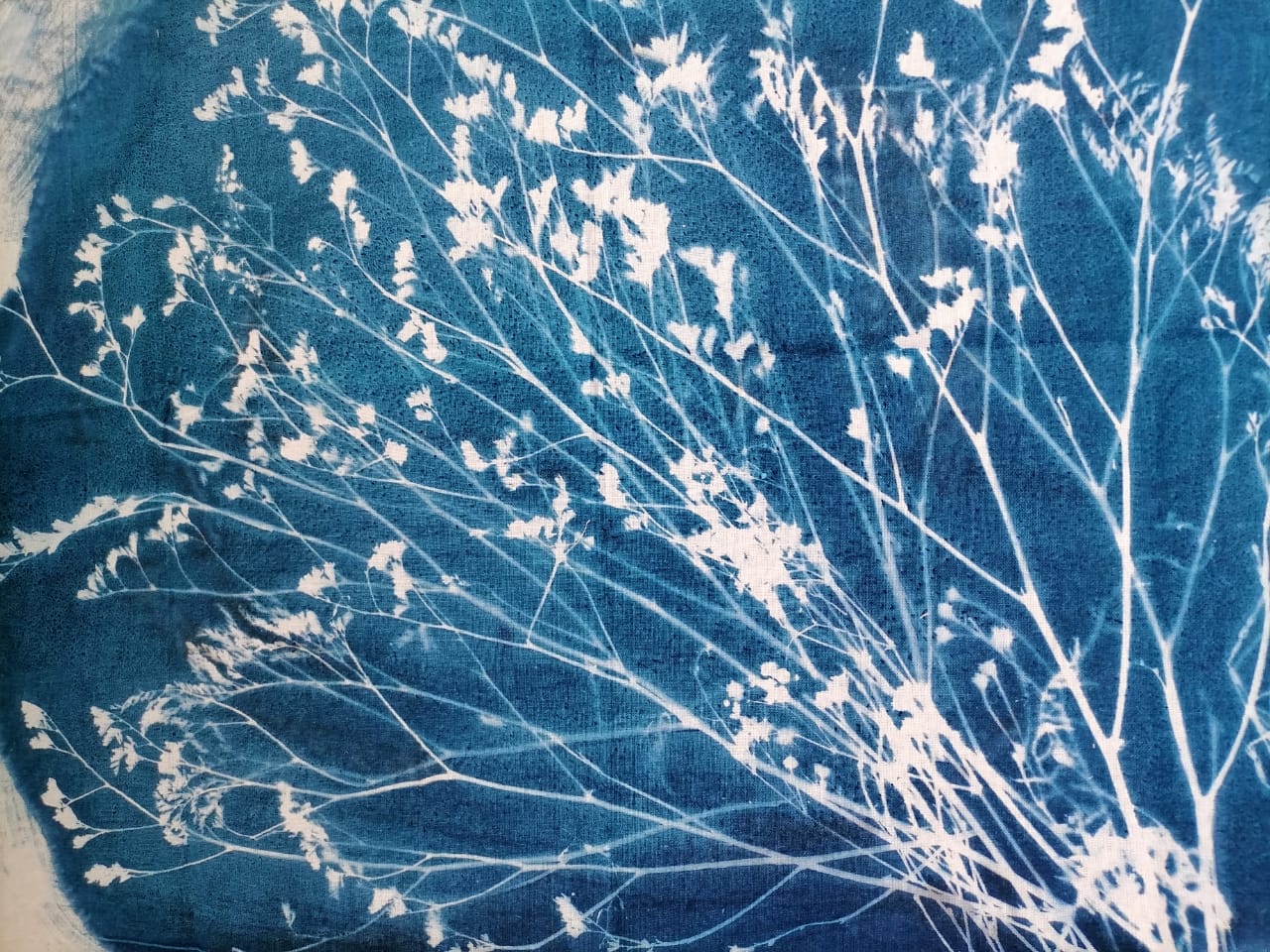
Nowadays, with the increasing interest in all old, hand-printing photographic techniques, cyanotype is experiencing a new popularity. The technique is extremely simple and remarkably flexible, as cyanotype images can be developed on a wide range of materials, including paper, fabric, stone, and metal, and even on glass.
To produce photos with cyanotype, two chemicals are needed: Ammonium citrate, and Potassium ferricyanide. Also required are paper, a negative or a few objects, if we want to create a photogram, a printing frame, a beautiful, sunny day or a UV lamp, and a few liters of water for development of the photographs.
The cyanotype process consists of a few simple steps. The cyanotype solution is applied to paper, which is then dried thoroughly. On this light-sensitive carrier, objects or negative film are placed. Under UV light, objects or negative film block part of the light, while on the exposed, uncovered part, the chemical composition of the light-sensitive emulsion changes. When a photograph is developed in ordinary water, the unexposed iron compounds are washed away from the photographs, while the newly-formed, water-insoluble iron ferricyanide, with it characteristic blue color, remains on the image carrier material.
Related products
-
Happiness
R350,00 -
Protea on Calico unframed
R150,00 -
Fynbos
R599,00


Reviews
There are no reviews yet.